

An RV water filter cartridge rarely stops working early for just one reason. More often, the cartridge is being asked to handle water conditions, flow rates, temperatures, or storage practices that are harder than its design assumptions.
A filter may be rated for a certain number of gallons, but real-world RV water is not consistent. One campground may have clear municipal water. The next may have rust from old pipes, visible sediment after a hydrant flush, high hardness, iron, or a disinfectant that is more difficult for carbon to reduce. A weekend trip can also turn into several months of stagnant storage if the cartridge is left installed between seasons.
The result is familiar: pressure drops, water flow slows, chlorine taste returns, or the water develops an unusual odor. Sometimes the cartridge is truly exhausted. Other times, the cartridge is still usable but is being restricted by sediment, operated too quickly, or affected by a problem elsewhere in the RV plumbing.
The good news is that cartridge life can often be improved substantially by matching the filter to the water, using sediment pre-filtration, controlling flow, and following a simple maintenance schedule.
Cartridge life is not one fixed number
A cartridge’s service life depends on more than the gallon rating printed on the package. The most important variables include:
- The amount and type of sediment in the source water
- Whether the water contains chlorine or chloramine
- How many gallons pass through the cartridge
- The flow rate during use
- Whether hot water reaches the filter
- How long the cartridge sits wet and unused
- The condition of the filter housing, seals, hoses, and RV plumbing
- Whether a water softener or specialty filter is needed for the source water
For that reason, two RV owners can use the same cartridge and get very different results. One may get many months of good service from a cartridge used only for occasional trips. Another may need a replacement after a few weeks if the RV is connected to a sediment-heavy well or campground supply.
The best replacement schedule combines the calendar with observation. Track when the cartridge was installed, watch flow and taste, and inspect the cartridge when it is removed. That information will help you adjust your setup instead of simply replacing filters at random.
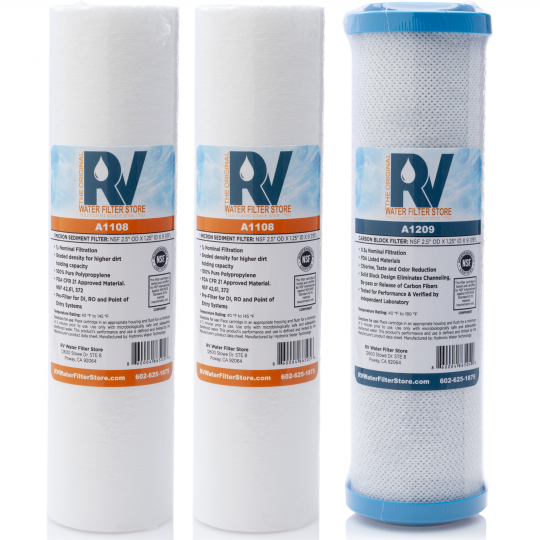
1. Sediment overload is the most common reason for early failure
Sediment is the physical material carried by water. It can include sand, silt, rust flakes, pipe scale, clay, and other particles. These materials collect in a sediment cartridge and gradually reduce the open space available for water to pass through.
A cartridge may look fairly clean from the outside and still be loaded internally. In a clear housing, you may see a dark band or discoloration near the inlet side. In other cases, the first obvious symptom is a weak shower or slow faucet.
Sediment loading can happen quickly when:
- A campground has older plumbing
- A municipal water main has recently been repaired or flushed
- Heavy rain affects a well or surface-water source
- The RV is connected to a private well
- The supply hose or spigot contains rust or debris
- A filter with too-fine a micron rating is used as the first stage
- Several fixtures are running at the same time
The better a sediment filter works, the more material it may collect. A dirty cartridge is not necessarily defective; it may be evidence that the cartridge protected the RV plumbing from unwanted particles.
How sediment damages carbon-cartridge life
Many RV filtration systems use separate stages: a sediment cartridge first, followed by a carbon cartridge. That arrangement matters.
A carbon cartridge can trap some sediment, but that is not its primary job. If sediment reaches the carbon stage in large quantities, it can clog the outer surface and reduce contact between water and the carbon media. The carbon may still have chemical-treatment capacity left, but the cartridge becomes too restrictive to use comfortably.
A coarse sediment stage acts as a protective shield. It catches larger particles before they reach the more expensive or more specialized cartridge downstream. In many RV setups, using the correct sediment pre-filter can extend carbon-cartridge life by two to three times compared with sending untreated sediment directly into the carbon stage. This is not a universal guarantee; actual results depend on water quality, filter size, flow, and cartridge specifications. But the difference can be substantial.
The practical lesson is simple: do not judge your carbon cartridge’s performance until you have considered how much sediment it is being forced to handle.
2. Sediment pre-filtration protects the entire system
A typical multi-stage arrangement looks like this:
- Sediment stage: Captures sand, silt, rust, and other particles.
- Carbon stage: Reduces chlorine, taste, and odor compounds.
- Specialty stage: Addresses a specific concern such as iron, scale-related issues, or a virus-rated filtration requirement, when appropriate.

The first stage should generally be selected based on the amount of visible sediment and the desired balance between protection and flow. A very fine sediment cartridge may provide more particle reduction, but it can also restrict flow sooner if the source water is dirty. A coarser first stage may be a better choice when the water contains larger particles and the goal is to protect a finer downstream cartridge.
The size of the filter matters too. Jumbo cartridges contain more media and generally offer more capacity and better flow than smaller standard cartridges. If your RV uses a lot of water or regularly encounters difficult sources, a larger system may reduce how often you change cartridges.
A staged system also makes troubleshooting easier. If the sediment cartridge is brown and the carbon cartridge is relatively clean, the first stage is doing its job. If both cartridges are heavily loaded, the source water may require more capacity or more frequent sediment replacement.
3. Chloramine can exhaust carbon faster than chlorine
Carbon cartridges improve water taste and odor by adsorbing or reacting with certain compounds. Free chlorine is generally easier for standard activated carbon to reduce. Chloramine, a disinfectant made by combining chlorine and ammonia, is more resistant and may require specialized carbon, more contact time, or a lower flow rate.
This distinction explains why an RV owner may replace a carbon cartridge in one city after several months but notice chlorine-like taste returning much sooner in another location.
Water utilities commonly publish annual water-quality reports. If you travel frequently, check the report for the city or water district when taste and odor problems seem unusually persistent. You can also test the water before and after filtration. A water test cannot replace the cartridge manufacturer’s specifications, but it can help reveal whether disinfectant, hardness, iron, or another water-quality issue is contributing to short service life.
If chloramine is present, do not assume a cartridge advertised only for chlorine will provide the same level of reduction. Look for a cartridge specifically designed and documented for the target condition, and pay attention to the recommended flow rate. More carbon media and slower flow generally provide more opportunity for treatment.
Also remember that chlorinated or chloraminated water that meets applicable drinking-water standards is still treated by the utility as potable water. An RV filter is often used to improve taste, odor, and additional water-quality characteristics; it is not a substitute for knowing the quality of the source or following safe-water practices.
4. High flow rates reduce contact time and increase restriction
A filter cartridge needs enough contact time with water to work effectively. When water moves too quickly through a small cartridge, chemical treatment can become less effective. High flow also pushes more gallons through the media in a short period, so the cartridge reaches its capacity sooner.
High demand occurs when:
- Someone is showering while another person runs the kitchen faucet
- The RV is filling its fresh tank through the filter
- A washing machine or dishwasher is operating
- Several fixtures are open
- A small standard cartridge is being used for a large motorhome
- The incoming pressure is already low
A pressure regulator is important for protecting RV plumbing from excessive campground pressure, but a regulator that is set too low or partially blocked can contribute to poor flow. Static pressure: the pressure measured while no water is moving: can also be much higher than flowing pressure. A noticeable pressure drop during use is normal, but a sudden or severe loss of flow deserves investigation.
To determine whether the cartridge is the restriction, compare flow with the filter installed and with the filter temporarily bypassed. If flow immediately improves when the cartridge is removed from the circuit, the cartridge may be clogged or the system may be undersized for your demand.
Do not leave the system bypassed for normal drinking and cooking unless you have another appropriate treatment method. The bypass test is for diagnosis, not a replacement for filtration.
5. Hot water can damage cartridges designed for cold service
Most RV drinking-water filtration cartridges are intended for cold-water use. They are installed upstream of the RV water heater so that filtered cold water enters the plumbing and the heater supplies hot water separately.
Hot water can soften or deform some plastic components, affect seals, and change how filter media behaves. Heat can also accelerate chemical reactions and contribute to premature performance loss. Even if a cartridge does not visibly deform, repeated exposure to temperatures beyond its specification may shorten its useful life.
For that reason:
- Install whole-RV drinking-water filtration on the cold-water supply.
- Do not connect a cold-water cartridge to a hot-water outlet.
- Check the cartridge and housing temperature ratings.
- Remove cartridges before using heat, chemicals, or sanitizing solutions in the system.
- Never assume that a filter rated for room-temperature water is suitable for continuous hot-water service.
If you notice a cartridge that looks swollen, cracked, distorted, or separated, stop using it and replace it. Inspect the housing and fittings before installing a new cartridge.
6. Biofilm growth can make a cartridge fail while it is sitting still
A wet filter cartridge in a warm, stagnant system is not in the same condition as a cartridge actively treating fresh water. Over time, microorganisms can grow on wet surfaces and create a slimy layer called biofilm. This can produce musty or earthy odors, change taste, restrict flow, and contaminate a replacement cartridge if the housing is not cleaned.
Long storage is especially important for:
- Seasonal RV owners
- Weekend warriors who leave the RV parked for months
- Motorhomes stored in hot climates
- Cartridges installed at the end of a trip and forgotten
- Systems with dirty housings or an unsanitized fresh-water tank
If the RV will be unused for an extended period, follow the cartridge manufacturer’s storage instructions. In many cases, removing the cartridge, draining the housing, cleaning the housing, and storing the cartridge according to its media type is preferable to leaving everything wet and connected.
Some cartridges have specific storage requirements. The RV Water Filter Store FAQ notes that ceramic, sediment, and certain F-series filters may be stored wet or dry in a clean, dark place, while some carbon-based cartridges have different requirements. Reverse-osmosis membranes also require special handling. Always follow the instructions for the exact cartridge rather than treating all filter media alike.
Before installing a replacement after long storage, sanitize the filter housings and, when appropriate, the RV fresh-water tank and plumbing. Do not run bleach or another sanitizer through a cartridge unless the cartridge manufacturer specifically permits it. Sanitizing chemicals can damage carbon and other filter media.
7. Long storage can shorten life even when the gallon count is low
A weekend traveler may think a cartridge should last indefinitely because the RV uses only a small amount of water. That assumption overlooks time and storage.
Carbon media can lose effectiveness while sitting in contact with water and air. A cartridge that was installed six months ago but used for only two weekends may still be a poor choice to carry into another camping season. The cartridge may have absorbed disinfectant during use, remained wet between trips, and spent months in a warm housing.
A part-time RV owner should record:
- Installation date
- Last date of use
- Storage conditions
- Water sources visited
- Any change in taste or odor
- Any change in pressure or flow
This record quickly shows whether the problem is usage volume or elapsed time. If a cartridge performs well during a trip but develops an odor after sitting for months, storage and sanitation are more likely factors than gallon capacity.
8. Water testing helps you choose a better cartridge
Guessing at water quality can lead to the wrong cartridge. A standard sediment-and-carbon setup may be appropriate for ordinary municipal water, but unusual taste, stains, scale, or rapid clogging may point to a different need.
Useful tests include:
- Hardness: Indicates calcium and magnesium that can contribute to scale.
- Total dissolved solids (TDS): Shows the overall level of dissolved material, although a standard sediment or carbon cartridge usually will not reduce TDS.
- Chlorine or chloramine: Helps explain recurring disinfectant taste and guides carbon selection.
- Iron: Can cause orange or reddish staining and rapidly load a cartridge.
- pH and alkalinity: Provide additional context for water chemistry.
- Turbidity or visual sediment: Helps determine whether pre-filtration needs to be more robust.
The Water Tests collection includes hardness test strips, chlorine-dioxide test products, and a TDS meter. These tools do not diagnose every possible contaminant, but they can provide useful comparisons between the campground spigot, the filtered outlet, and the RV tank.
For a more serious concern: such as suspected bacteria, elevated metals, or a private well problem: consider laboratory testing. A TDS reading alone does not identify which dissolved substances are present, and a clear glass of water is not proof that the water is free from contaminants.
Use test results to guide the system rather than automatically choosing the most restrictive cartridge available. The right setup is the one that addresses the actual water condition while maintaining practical flow.
9. Know the signs that a cartridge is exhausted
A cartridge can fail in different ways depending on its media. Sediment cartridges typically become physically restricted. Carbon cartridges may lose taste-and-odor performance even while water still flows normally.
Watch for these signals:
Pressure drop
A pressure gauge can help identify a restriction. Compare the pressure before and after the filter while water is flowing, not only when all fixtures are closed. A gradually increasing pressure difference usually indicates loading.
Reduced flow
A weak shower, slow faucet, or long wait to fill the fresh-water tank may indicate a clogged cartridge. First check for a kinked hose, blocked screen, restricted regulator, closed valve, or low campground pressure. If those are not the issue, replace or test the cartridge.
Taste or odor change
If chlorine taste, chemical odor, mustiness, sulfur odor, or another unpleasant characteristic returns, the carbon stage may be exhausted. A carbon cartridge can reach this point without looking dramatically different from a new one.
Visible sediment
Particles, discoloration, or cloudiness at the outlet may signal a loaded cartridge, damaged cartridge, poor seal, or contaminated plumbing. Stop and investigate rather than assuming a new carbon cartridge will solve the problem.
Unusual cartridge condition
Cracks, swelling, media separation, slime, or an abnormal odor are reasons to replace the cartridge and inspect the housing. If a new cartridge fails quickly, look for a source-water or system problem instead of repeatedly installing replacements.
Real-world cartridge-life examples
These examples are illustrative ranges, not guarantees. Actual life depends on cartridge size, filter rating, flow, water use, and the source.
| RV water condition | What may happen | Practical response |
|---|---|---|
| Clear municipal water, occasional weekend use | A standard sediment and carbon setup may provide several months of useful service, provided the cartridge is removed or stored correctly between seasons. | Track calendar time and taste, not just gallons. |
| Municipal water with chloramine | Taste or odor may return earlier than expected, even if flow remains strong. | Test the source, choose carbon designed for the condition, and follow its flow limits. |
| Older campground with rust and visible particles | The sediment cartridge may restrict flow in weeks rather than months. | Add or change the sediment stage more frequently and inspect the captured material. |
| Private well with sand, iron, or sulfur odor | A standard cartridge may load rapidly or become overwhelmed by dissolved and particulate contaminants. | Test the water and consider a larger or specialty system matched to the results. |
| Full-time RV use with multiple daily showers and tank fills | High gallon volume and high flow can shorten both sediment and carbon life. | Use larger-capacity cartridges, protect the carbon stage with pre-filtration, and monitor pressure. |
| RV stored for an entire winter with cartridges installed wet | The cartridge may develop odor or biofilm before its rated gallon capacity is reached. | Remove or store media as directed, clean housings, sanitize the RV system, and start the next season with fresh cartridges when appropriate. |
How to store spare cartridges correctly
Keeping a spare cartridge on board is smart, especially when traveling to remote areas. Store it correctly so the backup is ready when you need it.
- Keep unopened cartridges in their original packaging until installation.
- Store them in a cool, dry, clean, dark location.
- Protect them from direct sunlight and prolonged heat.
- Do not allow cartridges to freeze.
- Keep heavy tools and sharp equipment away from the packaging.
- Check the cartridge for cracks or damaged packaging before use.
- Rotate older spares into service before newer ones.
- Mark the purchase date on the package if the manufacturer provides a shelf-life recommendation.
Do not leave a spare cartridge loose in a compartment where it can absorb odors, collect dust, or be exposed to freezing temperatures. A sealed storage bin can provide an extra layer of protection, but it should not trap moisture around a cartridge that is supposed to remain dry.
For a replacement matched to your existing system, browse the Replacement Filter Cartridges collection. Confirm the cartridge dimensions, micron rating, media type, and intended application before ordering.
A maintenance schedule for weekend warriors and full-timers
Your ideal schedule may be different from another RVer’s, but a written routine prevents cartridges from being forgotten.
| Maintenance task | Weekend warriors | Full-timers |
|---|---|---|
| Inspect hoses, fittings, and regulator | Before each trip | Weekly or whenever moving to a new campground |
| Check visible cartridge condition | At the start of each trip | Weekly |
| Check pressure and flow | At the start of each trip and when flow changes | Weekly and whenever flow changes |
| Check taste and odor | Every trip | Several times each month |
| Replace sediment cartridge | Based on loading; commonly every few months in normal water | As soon as flow begins to decline or the cartridge loads; may be monthly in difficult water |
| Replace carbon cartridge | At least according to manufacturer time limits; often before a new season | Based on taste, testing, gallons, and manufacturer limits; commonly more often than seasonal users |
| Clean filter housings | At every cartridge change | At every cartridge change |
| Sanitize RV tank and plumbing | Before the season and after extended storage | On a regular tank-maintenance routine and after contamination concerns |
| Test water | At the start of the season or when changing regions | When arriving at a new water source, when performance changes, and periodically |
| Reassess cartridge selection | When visiting unusually difficult water | Whenever test results or repeated early failures indicate a mismatch |
These are starting points, not replacements for the instructions supplied with your cartridges and filtration system.
Does a water softener replace a filter cartridge?
No. A water softener and a filter cartridge address different problems.
A softener is used primarily to reduce hardness-related effects such as scale buildup, dry-feeling water, and mineral deposits. It does not replace sediment filtration or carbon filtration, and it generally does not reduce total dissolved solids in the same way reverse osmosis or deionization can.
If you use a softener, filtering the water before it reaches the softener can help protect the softener resin from sediment and certain water-quality problems. The softened water should still pass through the appropriate filtration stages before entering the RV.
Hard water may not be the reason a cartridge is clogging, but it can contribute to scale in fixtures and plumbing. If you see white deposits, test the water hardness before changing to a more restrictive cartridge.
Small accessories can prevent avoidable problems
A few basic accessories can also influence cartridge life:
- A drinking-water-safe hose reduces the chance of hose-related taste and odor.
- A pressure regulator protects the filter housing and RV plumbing from excessive pressure.
- A pressure gauge helps you identify restriction before the flow becomes unusable.
- Quick connects can make it easier to install a bypass or remove the filter for storage.
- A housing wrench helps prevent damage during cartridge changes.
These accessories do not make an incorrectly selected cartridge last longer, but they can reduce mechanical problems and make regular maintenance easier.
Make replacement predictable with Subscribe & Save
If you already know which cartridges your system uses, the Subscribe & Save replacement-filter program can help keep replacements on hand. Automatic delivery is particularly useful for full-time RVers or anyone who changes cartridges on a regular cycle.
Choose an interval based on your actual usage and water conditions, not an optimistic estimate. If you travel seasonally, you may prefer to schedule delivery before the camping season. If you move constantly, a shorter interval may prevent an unexpected shortage. Keep monitoring the cartridge even when replacements arrive automatically; an unusually dirty campground can require an earlier change.
The practical takeaway
When an RV water filter cartridge stops working early, replacing it is only part of the solution. First determine how it failed:
- Flow dropped: Look for sediment loading or another restriction.
- Taste or odor returned: Check carbon exhaustion, chloramine, storage, and plumbing sanitation.
- The cartridge became slimy or musty: Address stagnant storage and sanitize the housing and RV system.
- The cartridge clogged quickly: Test the source water and improve sediment pre-filtration.
- A new cartridge still flows poorly: Check the regulator, hose, fittings, fixtures, pump, and campground pressure.
- The cartridge looks damaged: Inspect for hot-water exposure, freezing, pressure problems, or installation errors.
For many RV owners, the biggest improvement comes from using a sediment stage before the carbon stage, selecting cartridges based on water testing, and storing cartridges properly between trips. A little recordkeeping also helps: note the source water, installation date, symptoms, and replacement date.
The goal is not to force every cartridge to last the same length of time. The goal is to make each cartridge last as long as its water conditions realistically allow while maintaining the water quality and flow your RV needs.

